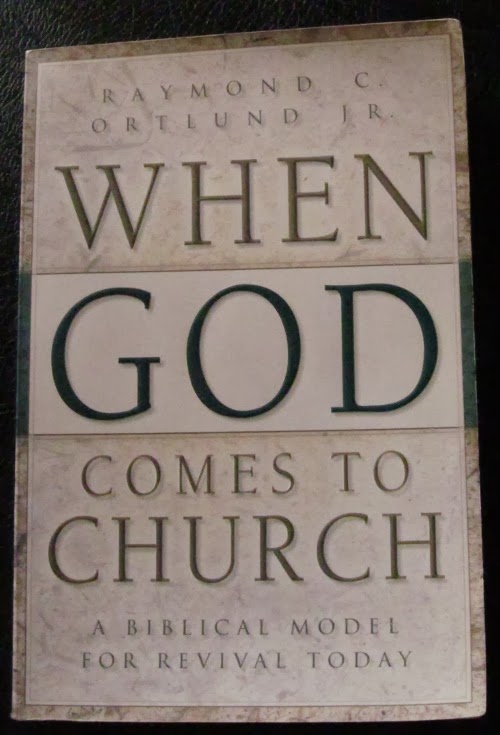
This isn’t really a review, it’s more of a brief reflection. Dutcher has identified the weak underbelly of the Young, Restless, and Reformed stream of Christianity today. As with all critiques of this nature, the author is speaking of the movement in general; the reader will always find exceptions in his personal experience. That said, you will do yourself no favors if in quibbling on this point or that you miss the overall thrust of Dutcher’s theme: Calvinistic theology is in danger of being controverted by the arrogance of some of its proponents. I remember once thinking of a bombast I was listening to, “If you are a Christian, please don’t tell anyone else.” One could say the same thing about some of Calvinism’s fans. And there have been times one could say the same thing about me.
Dutcher is not dealing with the arrogance of our opponents or their faults or failures; he’s pointing out sin in our camp. We who love Scripture and thrill in the doctrines of grace and feel deeply the depravity of man should be the very first to recognize—and confess—the scent of that depravity among ourselves—and in ourselves.
Dutcher is not a cheap-shot artist in the tradition of those who find it easier to criticise than construct. He’s rather a voice calling us to repentance, and to love, appreciate, respect, and learn from those who differ. Pick up any good volume on church history and turn to the early church fathers and read what they wrestled with as the orthodoxy of the church was discovered from Scripture over the first five hundred years or so after Christ, before you start slinging around the term “heretic.” Read Augustine, for instance. That godly champion of justification by faith had an amazing amount of residual Roman Catholicism in his belief system. Shall we call him a heretic?
And is it not possible that both we and our brothers and sisters in Christ will experience some recapitulation of “faith seeking understanding” as we wrestle with the meaning of Scripture? How many of today’s enthusiastic Calvinists went through their early Christian life with an essentially Arminian understanding until their ongoing study of Scripture reformed their thinking? I know I did. And are we not willing to give our brothers and sisters the love and respect and time and space to work through the issues themselves, just as we did?
Our church has a two year course in advanced theological training. Dutcher’s book just became part of the required curriculum. I commend it without reservation.
Opinions on Christianity and biblical themes, some political commentary, occasional book reviews, and samples of humor and fiction writing (flash fiction pieces as well as excerpts from my novel-length works).
Friday, April 4, 2014
Wednesday, March 26, 2014
No-fault Divorce
World Vision today divorced itself from
its policy decision, announced March 24th, to recognize gay marriage
by hiring gays living in monogamous, faithful relationships.
To be fair, World Vision claimed in that
same news release that they were expressly not recognizing gay
marriage.
To be real, that’s precisely what
they were doing.
World Vision states unambiguously that
they require from their employees sexual abstinence outside of
marriage. Unless World Vision has also redefined “abstinence,”
one can hardly consider anal sex as sexual abstinence. Hence, they
did recognize gay marriage as marriage, despite their
sophistry to the contrary.
They proclaimed that this move was made
to foster unity among the churches. Um, would that be the same sort
of unity that has split The Episcopal Church, because last time I checked that's precisely what endorsing homosexuality did for TEC? Would that be the same
sort of unity that is splitting the PCUSA?
And of what unity do they
speak, anyway? The prayer in which Christ sought for unity among His people
in John 17 also included a request for their sanctification—their
holiness, by means of the truth. On what grounds does World Vision
see homosexuality as a move toward sanctification?
Does World Vision ignore the great
disdain in which the global south holds the practice of homosexuality? Do they wish
to subject their workers to added danger as Muslims in other
countries react with anger to this decision, as one more example of the decadence of the West?
This was not a policy or procedural
error. This was an abandonment of truth.
In his explanation for their decision
to divorce gay marriage after having married themselves to it, Richard Stearns said that he did not consult
enough Christian leaders. Perhaps he could have saved himself a bit
of trouble by consulting the Bible instead.
Monday, March 24, 2014
Letter to a Seminary Student
A young man I respect very highly is taking seminary classes and beginning to wonder whether it is worth it. At the graduate level of theological study one gets exposed to much material that is of questionable value in terms of truth, but is necessary simply so that the student is aware of what's going on out there in the theological world. Sometimes it can get a little frustrating. He wrote, and here are snippets of his questions and my responses.
1. I'm noticing that we
read and study a lot about the various theories and methodologies
used to approach scripture, rather than the content in and of itself.
It is feeling like man's words are being elevated above God's. I
understand that there is much to be learned from men who God has
blessed with scriptural understanding and the ability to communicate
that material. I welcome that sort of instruction.
You’ve hit on a perennial problem in
theological studies. Do we study the Word, or do we study what others
say about the Word?
Some believe it is better to read
nothing but the Bible. Anything else is the word of man, and not
worthy of our time. On the other hand, no one in their right mind
would argue that we should only study what others say about the Word,
but in practice that is what some seem to do.
So what’s the answer? Study the Word,
or commentaries and theologies? The answer is, “yes.” In other
words, we should do both. In fact, God would have us do both.
According to Ephesians 4:11, one of the
gifts God has given the church are pastor/teachers. In Acts 13:1
there are teachers at the church of Antioch. Note well: God gave the
church teachers, not simply Scripture readers. In 1
Timothy 4:13 Paul instructs Timothy to give proper attention to the
reading of the Word. But in the same verse he adds, “to
exhortation, to teaching.”
Books written by men about the Bible
are nothing other than their teaching ministries put to paper.
They may be good teachers, poor teachers, or false teachers but the
fact remains—God gives to His church teachers. And if the Lord
gifts men for such a role (Romans 12:7), and gifts the church with
such men (Ephesians 4:11), one can only assume we should be listening
to them (and we should also be discerning who are the bad and false
teachers so that we may reject those).
Having established that there is a
place for reading the works of men—theologies, for instance—let
me advocate a balance. One of the unfortunate tendencies I have seen
among Internet theologians is a skillful use of theological
terminology and concept, coupled with a shameful ignorance of the
biblical text and an inability to deal with it. This is one of the
reasons we have started limiting admission to our ATT class to those
who have read the entire Bible through at least once. Theological
literacy should always follow, never precede, basic biblical
literacy.
One of the (many) things I really
appreciated about Westminster Theological Seminary in Philadelphia is
the mandatory English Bible Exam all potential graduates must take
and pass before being granted a degree. Someone wisely realized that
it’s possible to produce propeller-heads who are experts in the
languages of the Bible, skilled in theological concept and nuance,
but basically ignorant of the text. And so the school insists that
one must be able to name the Bible books in order, identify which
books which texts come from, and other basic facts of biblical
literacy before graduating. Unbelievably, there are enough people who
fail the test that WTS has a remedial course for those who don’t
get it on the first go-round.
Therefore, it is your job to establish
that basic biblical literacy as you are taking your classes. If your
classes are not requiring a significantly challenging amount of
reading in the Bible itself, then you should be doing it in your own
devotions. The purpose of a class in theology is to teach you
theology: the results of someone else’s
systematic, inductive study of the biblical text.
But to conclude that the study of
theology is unnecessary is an equally bad mistake in the other
direction. Whenever you encounter a verse in the Bible that is hard
to understand, your reflexive instinct is to look for other passages
dealing with the same period of time, or topic, or context, so that
you may compare Scripture with Scripture and hopefully come to a
better understanding. This practice has a name: “the analogy of
faith.” Your interpretation of a passage needs to be compared with
other passages to see that it does not contradict other texts.
Anytime you begin comparing one
Scripture with another in order to determine meaning, you are
employing a theological system. You
may not be aware of it and it may not be a good theological system,
but it is nonetheless true. You already have a theological system
in place when you first approach the Bible. One of the goals of
biblical and theological studies is to refine your personal
theological system so that it is informed by the text and accurate in
its understandings.
So let’s immediately dispense with
the idea that you can read the Bible without doing theology. Not
possible. The question is not whether you can dispense with theology
(you can’t), but whether your theology is accurate to the text as a
whole.
2. Yet, I question the
motives of some (they seem prideful). I desire growth in the knowledge
and understanding of God and His relationship with men.
Yes,
generally speaking what you are seeing is real, and no one is
exempt—not me, not you. Pride is a constant problem in theological
studies. I think most recognize it and all godly theologians hate
that capacity within themselves. Pride is something I struggle with
every time I write or speak (and some will question why, seeing as
how I have little to be proud about!).
In
any sort of advanced theological studies (advanced being that which
is done at the seminary level), you are going to be required to read
materials you simply detest. There will be some articles and books
that cause you to wonder whether the author is even regenerate. This
is the price of learning at this level. Yet it will ultimately be
helpful as you grow in your capacity to spot error. Someday you may
need to be protecting your sheep from that same error, whether you
are a pastor, Sunday School teacher, small group leader, or simply an
older believer mentoring a younger one.
At
BFC I have to edit our children’s church material, to eliminate the
Keswick theology it contains. I am asked to identify books that
can—and cannot—be used by our teachers for Sunday School. I am
constantly asked by earnest believers about this doctrine, and that
radio preacher, and this tract or that book. All pastors, counselors,
teachers, mentors, are faced with a constant stream of material, some
of which may be toxic to the spiritual health of the people for which
they are responsible. It’s exposure to the nasty stuff in a
seminary-level theology course that will prepare you to identify and
reject unbiblical teaching.
3. We focus so much on
"scholarly" writing that it is as if my entire purpose is
to be published, when all I want is to know God more and be more
equipped to share Him and His word with others.
You
may never be a writer; but you will always be a communicator. This is
the time for you to learn to write well and communicate precisely and
clearly. Don’t short-circuit it. There is a certain rigor attached
to seminary-level study. Don’t hate it and don’t fight it lest
you be miserable.
And
think about this: you have always heard teachers say things like, “I
never learn so much as I do when I am preparing to teach others.”
This is true. The care, time, energy, and sweat you expend to write
well is helping you to formulate, clarify, and understand your
own beliefs. It is helping you express those beliefs,
which is what you will be doing when you “share Him and His word
with others.”
Your
wrestling coach would say, “Suck it up and just do it!” but since
I’m not a wrestling coach and I’m much kinder and gentler, I
won’t say that. Even though it is good advice.
4. Am I
misunderstanding the point of what I'm reading/writing in these early
courses? Are we laying a foundation to build upon? If so, why isn't
the foundation the Word of God and not man's?
Yes,
yes, and it is.
At
every turn in your required reading you should be evaluating the
truth/error of what you are being exposed to. You should be doing
what the Hebrew believers in Hebrews 5:11-14 did not do, and they
earned a rebuke from the Spirit of God for not doing so. In your
studies, you are training your senses to discern good and evil
(Hebrews 5:14b).
The
foundation you are laying is that of the Word of God only to the
extent you are evaluating what you are reading, and are
comparing and contrasting it with the Bible, and accepting or
rejecting it only as it passes or fails to pass the measure of the
canon of Scripture.
When
I attended Westminster I had to exercise discernment in every lecture
and every reading. Most of the professors were godly Christ-honoring
men at whose feet it was a privilege to learn. A few instructors were
playing fast and lose with the inspiration and inerrancy of Scripture
(some have since been dismissed by WTS). I cannot speak highly enough
of the value of both: with the one group I learned more of the Word
of God and with the other I learned how to be discerning and gracious
in what at times was a somewhat adversarial atmosphere. I learned how
subtle error can be. I learned to stick to my guns.
5. Are we laying a
foundation to build upon?
Let’s
get to the bottom line with a closing comment about the difference
between classes from the Bible department and classes from the
Theology department. There is a difference.
In
your Bible classes you are going to be doing a lot more reading of
the Bible itself, and gaining a stronger biblical literacy. Your OT
and NT survey classes will be among the most helpful, and will
probably really scratch the itch you have for the Word of God.
Your
Theology classes—depending on their level—are assuming a basic
biblical literacy. They are going to be concerned with how the
various statements of Scripture can be combined to result in a
comprehensive theological sketch of God, man, sin, salvation, etc.
Different theological systems will create somewhat different
sketches. Covenant Theology and Dispensational Theology are not going
to produce identical pictures, for instance.
You
need both Bible and Theology to prepare you to serve others. Do you
know where my theology gets the most vigorous workout in ministry?
It’s not in the Advanced Theological Training classes I teach. It’s
in my biblical counseling work. A very wise pastor once said to me at
the beginning of my seminary career, “Chris, if you want to
counsel, take theology classes.” It was good advice.
So
stay the course. You can do it. It will be worth it. And it will
equip you to serve Christ by serving others.
Monday, March 10, 2014
Book Review: Landscape Turned Red: The Battle of Antietam
Stephen W. Sears, Landscape Turned Red. New York: Houghton Mifflin Harcourt Publishing Co. (Mariner Books, 2003 edition).
This volume ranks among the best works
of military history that I have read. Sears is a top-drawer writer
and historian, and this book displays both those skills. It’s one
of the few histories I’ve read that could be legitimately described
as a page-turner.
Sears does a great job of unfolding the
context for the Battle of Antietam—of 336 pages in the main body of
the book, fully 180 are devoted to establishing the background. Much
of that material is spent elaborating General George B. McClellan’s personal history and conduct up to the collision between the armies on
September 17, 1862. I didn’t come away feeling that any of the
detail was unnecessary. In many respects the book is an examination
of McClellan, and Sears is not among his fans.
Those looking to redeem the general
from history’s opprobrium will need to look elsewhere. By the
extensive use of original documents, Sears has documented the man’s
failings as a combat commander, although he balanced his critique
with a fair assessment of McCellan’s strong record of organizing
and training the Army of the Potomac.
The threads of political intrigue that
were whirling about Washington are well represented, as is the
dithering of the Great Powers as they grappled whether or not to
support the Rebellion.
From the first bullets of the
skirmishers to the slow withdrawal from the battlefield, Sears is
able to narrate the action in such a clear way I was able to follow
it without difficulty. The biggest problem was keeping track of which
commanders were attached to what unit, as the officers were mowed
down so rapidly even regiment and brigade commanders were quickly
used up. The maps Sears has included are excellent; you might want to
mark the maps with post-notes to enable you to find them easily.
This book will be a treat for those who
enjoy military history, especially as regards the Civil War. I
recommend it highly.
Friday, March 7, 2014
The trajectory of unbelief
Just finished reading Calvin on the
credibility (trustworthiness) of Scripture (chapter 8 of book one of
the Institutes). Calvin begins with this statement (emphasis
mine): "In vain were the authority of Scripture fortified by
argument, or supported by the consent of the Church, or confirmed by
any other helps, if unaccompanied by an assurance higher and
stronger than human judgment can give. Till this better foundation
has been laid, the authority of Scripture remains in suspense."
What Calvin is saying here is something
that outrages modern scholars: the truth of the Word of God is not
something known by human investigation: it can only be known by
regeneration (i.e., getting saved), followed by the illuminating
activity of the Holy Spirit. In other words, the Word can not be
known by unaided rationality. This gets to the heart of the
argument between theologically conservative scholars and
theologically liberal scholars.
The points I am about to make have more
to do with scholars, academics, and pastors than it does the average
person in the pew. There are many true Christians who wrestle with
the question of biblical Creationism, but they do so because they are
unaware that theological belief resembles more a web than it does a
rope. Most average Christians are unaware of the contradictions they
create for themselves elsewhere in Scripture when they do not believe
the literal account of creation. Scholars and pastors, on the other
hand, are fully culpable. This essay applies to those of us who
presume to teach the Bible to others.
Conservatives and liberals have terms
that we sling at one another: fideism and rationalism.
Liberals accuse conservatives of fideism: taking positions based on
faith alone, flying in the face of evidence. Building our belief in
young-earth creationism from our convictions regarding the
inspiration and inerrancy of Scripture is to modern liberal critics a
flight of anti-intellectual fancy in which faith silences, squelches,
and suppresses modern science. It’s fideistic.
On the other hand, conservatives accuse
liberal critics of rationalism: of refusing to believe anything that
can not be supported by the consistent use of human rationality as
informed by empirical evidence.
In one sense we are talking past one
another. We conservative, Bible-believing Christians do not engage in
irrationalism in order to practice our faith. We use rational thought
to process what the Bible tells us. Systematic theology is the one of
the fruits of a tightly reasoned faith. Biblical theology also is a
rational (but not rationalistic) endeavor. The distinction between us
is that when we conservatives bump up against something that seems to
go against modern evidences, we anchor our belief on the Bible and
best-practices of interpretation. We will gladly fly in the face of
modern thought if we believe the biblical text compels us to do so,
and we don’t give a flying fig about what the evangelical,
academic, or cultural world thinks of us. We do this with confidence
because of the internal testimony of the Holy Spirit as to the truth
of His Word.
Consequently whether one speaks of the
paradoxes and other difficulties involved in the Trinity, human
responsibility versus divine sovereignty, the existence of evil, the
creation of the cosmos, miracles, or bodily resurrection, we will
surrender to the text, even though we may be incapable of explaining
it at some points. For this we are called fideists. Okay, guilty—and
faithful.
While the charge of rationalism that we
conservatives bring against liberal Christians and liberal critics is
mostly true, it is not completely true. Liberal Christians reject out
of hand most meaningful notions of creation, and accept almost all
the provisions of evolutionism, claiming that God does what He does
by natural processes. They reject Creation and a literal
interpretation of Genesis 1-11 not on the grounds of exegesis but on
the grounds that they do not fit the conclusions of modern science.
Having been persuaded by science, they return to the text and
eisegete it: they “read into” a perfectly understandable account
of creation all sorts of interesting “figurative” language. Never
mind that the vast bulk of the history of orthodox Christianity never
saw the text that way. There are a few exceptions, of course, but
they are in the clear minority. There’s nothing new in the playbook
of unbelief: just recycled arguments.
I mentioned that Christian liberals are
not necessarily thorough-going rationalists: they are rather,
inconsistent rationalists. The dead giveaway is their view on the
resurrection. While modern science completely pooh-poohs the notion
of a real, bodily resurrection, liberal Christians—for a
while—insist on believing it. Thus are they inconsistent with
themselves: they deny the creation account because of the verdict of
modern science; they believe in the resurrection against the verdict
of modern science.
At this point the careful reader might
think, “Okay, Cobb, what’s the diff? You conservatives are
inconsistent, the libs are inconsistent—so what? At least they land
correctly on the big point—the resurrection—as a matter of faith.
Is this not proof of the reality of their faith?” Yes, it possibly
is proof of precisely that. I certainly hope it is, for their sake.
But I am concerned that it might be a demonstration, rather, of a
sentimental attachment to vestigial orthodox Christianity than a
genuine, vigorous faith. The reason I believe this also points out
the distinction between our inconsistency and theirs: it’s the
matter of the ultimate source of authority. The conservative believer
takes the Bible as his source of authority: end of story. That’s
why we dispute evolution, abortion, homosexuality, modern morality,
etc. We do so because the text compels us to. On the other hand, for
the liberal, it appears that science has become their highest source
of authority. If so—and many of the signs point this way—the
Christian faith of the liberal is merely a waypoint on an evolving
journey to somewhere else.
You see this all over the blogs: “I
used to be a fundamentalist, and then I realized it was a cult of
narrow-minded, hateful, abusive people. I was liberated when I
finally realized that evolution makes creation impossible, and that
you don’t have to believe that silly stuff to be a Christian . . .
” Unfortunately, they do have a point. There are a lot of horrible
examples of fundamentalists, such as Fred Phelps and Jack Hyles and
many, many others—people who seem to believe that the Bible
licenses hate, condemnation, dictatorial control, etc.
But the misuse of the Bible does not
argue for its invalidity any more than the liberal misuse of 1 John
4:8 (“God is love”) argues for the invalidity of that text. Where
will that former fundamentalist be in another five years, or ten?
That’s the real question. I believe the truth of the matter is that
many Christian liberals don’t have a settled position. They are,
rather, on a trajectory of unbelief. The unbelief at the core
of their being comes to slow flower: among the first things to be
jettisoned is a meaningful notion of the inspiration of Scripture.
Oh, they claim to believe it—they just continuously restrict its
meaning until it no longer governs their exegesis and remains little
more than a meaningless bullet point on their statement of faith.
Keep an eye on them. While on their
trajectory of unbelief it is inevitable that they will cross a number
of other markers. At some point the resurrection will be redefined
(“it’s a spiritual resurrection, not a bodily resurrection”),
as will the nature of God (they will return to something like a modal
view of the Trinity, and possibly to a benign, Christianized
pantheism). It will take years. Their sentimental attachments to the
form and pageantry and mystery of worship will keep them in a church
of one nature or another. But there will be neither redemptive truth
nor redemptive power in their belief. John Shelby Spong is a perfect
example of this trajectory of unbelief. Spong is the famous Episcopal
bishop who argued that Christianity must change or die, and that we
can no longer conceive of God as a truly personal being. He has
jettisoned all of the major aspects of Christianity and is little
more than a thorough-going humanist who has retained the word “god”
in his personal lexicon.
Book one, chapter eight of Calvin’s
Institutes, closes with these sentences (emphasis mine): "But
it is foolish to attempt to prove to infidels that the Scripture is
the Word of God. This it cannot be known to be, except by faith."
Apart from the regenerating power of the Holy Spirit, the Bible
remains a closed book. Amen.
Friday, February 14, 2014
Review: When God Comes to Church
When God Comes to Church, by Raymond C. Ortlund, Jr.
If I could summarize this book with a
word, it would be “Wow.” Raymond Ortlund takes the reader on a
tour of a number of passages in the Old Testament prophets as he
builds a case for what revival is, and what it isn’t. Mixed with
his outstanding exegesis are illustrations from noted revivals of the
past, and the comments of good pastors and theologians who were
contemporaneous with those events. In this exploration Ortlund takes
advantage of a clear-headed historical hindsight.
Part one of the book is arranged under the
theme of “What God can do.” The chapter titles summarize
Ortlund’s directions: God comes down to us; God reinvigorates us;
God heals us; God pours out His Spirit upon us; God raises us up; God
restores us. In this part Ortlund celebrates the sovereignty of God,
unfolding it not as something which frustrates our efforts, but
something that gives us ultimate hope even as it preserves the purity
of revival itself.
Part two moves to the next step: “What
we must do.” Again his chapter titles tell the tale (and by the
way, they deliver what they promise): we return to God; we seek God;
we humble ourselves. Ortlund again returns to surgically-precise
exegesis to show us what the text actually says about these things.
The last chapter, on humility, is probably one of the best pieces of
literature I’ve read on the topic.
Here is what distinguishes this book
from many other modern works. All too many modern books, for all the
great intellectual commitments of the authors to God’s glory,
remain essentially man-centered. You’ve typically got one or two
verses that are followed by a chapter of illustrations and ten points
of how to apply what you’ve learned (presumably, what you’ve
learned from those one or two verses).
This is where Ortlund shines. He
exegetes complete passages of Scripture, he’s not tossing a few
verses on the salad as garnish. The power of the book rises from the
power of the biblical text. His exposition is accurate,
context-sensitive, and flat-out convicting. By the time Ortlund
himself applies the text (which he does do, make no mistake), the
Holy Spirit has already beaten him to the punch. Ortlund’s
applications are firmly anchored in responsible exegesis.
I am convinced this is the best way to
teach and preach, and it protects the reader/hearer from applications
that go askew, the accumulation of which could potentially lead into
more serious error. The topic of “revival” has seen its share of
these problems in American Christianity. Ortlund’s work in “When
God comes to Church” restores a proper, biblical view of revival. I
recommend it thoroughly.
Tuesday, February 4, 2014
Nye-Ham Debate thoughts
Watched the Nye-Ham debate this
evening. I thought it was a good exchange, well worth the time. I
don't think this debate could be scored in win-loss terms. Ken Ham
did a good job making sure the Gospel was proclaimed, and he did not
shrink back in any way from the Bible. He did a good job of
representing the truth.
I think Nye did a good job of
representing his position. Apart from the Spirit of God the Word is
foolishness to him. That was clearly seen, but I thought (with a few
exceptions) that he did a good job of avoiding some of the more
outrageous slanders that folks like Sam Harris sling around.
I would have liked to see Ken Ham do a
better job with the point of historical science. At times he was
almost contradictory. On the one hand, he asserted that because we
were not there in the past we don't know what the rates of processes
were. On the other hand he asserted that God is a God of order, and
because of that fact we can do science and know that we will obtain
the same results yesterday, today and tomorrow. I felt his
explanation of this was a little clumsy and a little lacking.
The best model I can think of is that
of a discontinuous function in mathematics. In some discontinuous
functions as you approach the boundaries the value of the function
gets out of hand. An example might be y=1/x. As x approaches zero
the function value approaches infinity.
Here's the point. With some possible
exceptions, "historical science" works precisely like
"experimental science" - except as you approach the
boundary of Creation. The Law of the Conservation of matter and
energy doesn't work at the moment of Creation, for example. But it
works immediately following Creation.
Ken Ham made it sound like if an event
occurred in the past, the present processes can't tell us anything
about it. That simply is not true. What is true is this: science can
not tell us about origins because it was the supernatural power of
God that originated all things. The origin of Creation is the
"boundary" of the function, to use my illustration above.
The other problem extrapolating origins is that God created with the
appearance of age. For example, to assume the presence of no
radiometric daughter products is unwarranted.
Anyway - this was my only beef with
Ham's performance tonight. Though I am sure he did not intend this,
he made it sound as though we can not extrapolate processes reliably
backwards into history. We can - so long as we do not approach the
"boundaries," and as long as we acknowledge that we do not
necessarily know the starting conditions.
Otherwise, he did an outstanding job.
Wednesday, January 29, 2014
Parenting Tip: Now or Later
It’s Friday evening, and
you’re coming home from work looking forward to a fun time with the
family. As you come through the door you hear your five-year old
speaking in a disrespectful tone to your wife. Body language, tone,
content, it’s all wrong. So what do you do?
- Excuse it. “It’s just a phase he’s going through. He’ll grow out of it.”
- Hope your wife will deal with it. “I’ve had a long day, I deserve a little rest.”
- Ignore it. “Want a fun evening. It’ll be hard to do that if I discipline him.”
- Blow your top and shout at him. “If I can terrify him with my anger, it will teach him not to talk that way. I’ll shout at him and put a good scare into him.”
- Threaten/Promise, but don’t act on it. “If I hear that again, I’m going to paddle your bottom.”
- Deal with it biblically. “Hey, buddy! I just heard what you said to mommy, and it was downright disrespectful! What do you think Jesus would say about that? I think we need to go to your room and have a little talk.”
One of the keys to a
family that honors Christ is biblical discipline that begins very
early in the life of your child. It involves teaching,
reproof, correction, and training. Your children need to be taught
what God says—by YOU—right out of the Bible, and your
teaching needs to be backed up with properly applied parental
discipline. The model of discipline the Scripture most frequently
provides is spanking: “The rod and reproof give
wisdom, But a child who gets his
own way brings shame to his mother”
(Proverbs 29:15). If you doubt this, look up the occurrences
of “rod” in Proverbs—most of the time it is speaking of a
properly administered spanking.
Biblical discipline is
hard to do, it is time-consuming, it’s often heart-breaking for us
as parents, it’s not fun, and it often brings as great a conviction
of sin on the parent as it does the child. As I discipline my child
for how he/she spoke to my spouse, I am convicted of my own sinful
speech as well.
But if you spend the sweat
equity to teach them now, you will honor Christ, and you’ll enjoy
the fruit of an obedient, peaceful household as they grow older:
“Correct your son, and he will give you comfort;
He will also delight your soul”
(Proverbs 29:17) .
Your efforts to “preserve
peace” in the short-term by neglecting discipline, however, will
yield long-term heartache and grief. “A foolish
son is a grief to his father, And
bitterness to her who bore him”
(Proverbs 17:25). Putting off discipline is a bad bargain:
discipline your children now, while there is hope of correction!
Saturday, January 25, 2014
Book review: Warrior Soul
Warrior Soul is the memoir of
Navy SEAL Chuck Pfarrer, a true account of his training, experiences
and exploits. I read it as research for my own novel, Falcon
Strike. It’s always difficult to review a book whose content
concerns a matter the reviewer has never personally experienced. I
believe the book is authentic and honest, but only another SEAL is
really qualified to make such judgments.
I grew to like the author as I got to
know him through his own words. Pfarrer is a man with clay feet, but
refreshingly he does not seem inclined to hide it. His indiscretions
and mistakes get the same treatment as do his acts of valor, probably
because after all he’s been through and accomplished he simply does
not care about my judgment, or yours.
The book is divided into three parts.
The first deals with his training at BUD/S and beyond, and then eases
into actual operations. The second deals with his deployment with
SEAL Team Four to Beirut and the massive truck bomb that killed 220
men of the 24th Marine Amphibious Unit in 1983. Bitterness and anger
seep through every page of this portion, and it infects the reader as
well. Perhaps it had been better for America if that truck bomb had
taken out 220 of our politicians or top brass instead of the marines
[my observation, not his]. Idiotic rules of engagement and a military
command structure that had apparently learned little since the days
of the Ardennes consumed men in place rather than preserving their
operational value by rotating them off the line periodically. Our
recent attempts at nation-building make it apparent that the
political leadership (both liberal and conservative) aren’t able to
tell a SEAL platoon from the Peace Corps.
That anger spills into part 3 as
Pfarrer recounts the change in leadership of SEAL Team Four, and his
difficulty returning from Beirut. Pfarrer applies for and receives a
coveted spot on the secretive SEAL Team Six’s training team, the
“Green Team,” and passes the brutal training regime, ultimately
winning the command of a platoon in the black ops group.
One of the things I take away from this
book is the almost super-human edge to which the SEALs are trained.
That training regime, their strict performance standards, their
meticulous planning, and the indomitable will of the individual
operators is what accounts for the amazing record of success enjoyed
by these elite units.
The quality of Pfarrer’s writing is
outstanding. At no point in the book was I bored. And he’s not some
soulless shooter; he’s a deep, honest, and at times profound
thinker. His literary craft is excellent. For example, Pfarrer opens
the book with an account that he does not complete until the end of
the book, creating a bookend structure that is delightful. It’s a
neat literary arrangement. A warning is in order, however: there’s
a great deal of bad language in the book.
Warrior Soul is a great book, a
large picture window into a world most of us can not even imagine. On
the one hand I am thankful for the men who are willing to sacrifice
so much to keep the bad guys at bay. On the other, it makes me
disgusted with the political figures and the political generals and
admirals who misuse our armed forces and task them with rules of
engagement in operations better given to the Boy Scouts than the
SEALs.
Saturday, January 18, 2014
Psalms studies snippet
One of the members of my church emailed me with a question, "Do you know how old David was when he wrote Psalm 23?"
Here is my answer, which might provide a few useful snippets of information to you as you read the psalms:
No. One of the more speculative parts of Psalm studies is attempting to discover what theologians call the sitz-im-leben, a term that means "situation in life." These speculations have led to all sorts of fanciful ideas not anchored in Scripture. Occasionally we will get some help from the caption, or superscription. In our English bibles, the caption is the small type at the very beginning of the psalm, and it is usually not in italics. The superscription of Psalm 23 is "A Psalm of David." Not much help there locating the psalm in a situation. But take a look at Psalm 18 - it has an extended caption that provides some background, not only of the situation, but of how the psalm was to be used: "For the choir director."
The captions are actually in the original manuscripts, and they are part of verse one. For example, the Hebrew text of Psalm 90 has "A prayer of Moses, the man of God" as the opening words of the psalm.
Most conservative scholars believe there is a reason why the psalms are so hard to pin down to a specific life situation: it enables the reader to identify with and apply the psalm regardless of his situation.
Subscribe to:
Posts (Atom)